Filing Season 2026 Dates, Documents and Common Mistakes
The 2026 tax season is upon us, which can spell stress and overwhelm for South African taxpayers. While the South African Revenue Service (SARS) has continued to simplify the filing process through expanded auto-assessments and prefilled tax information, preparation is still key.
Starting early helps you avoid the last-minute rush during filing season, reduces the risk of errors, and gives you enough time to gather all supporting documents. To help you prepare, we’re sharing essential filing season dates, which documents you need, and common mistakes that may cause delays and penalties.
What Are The Filing Season 2026 Dates?
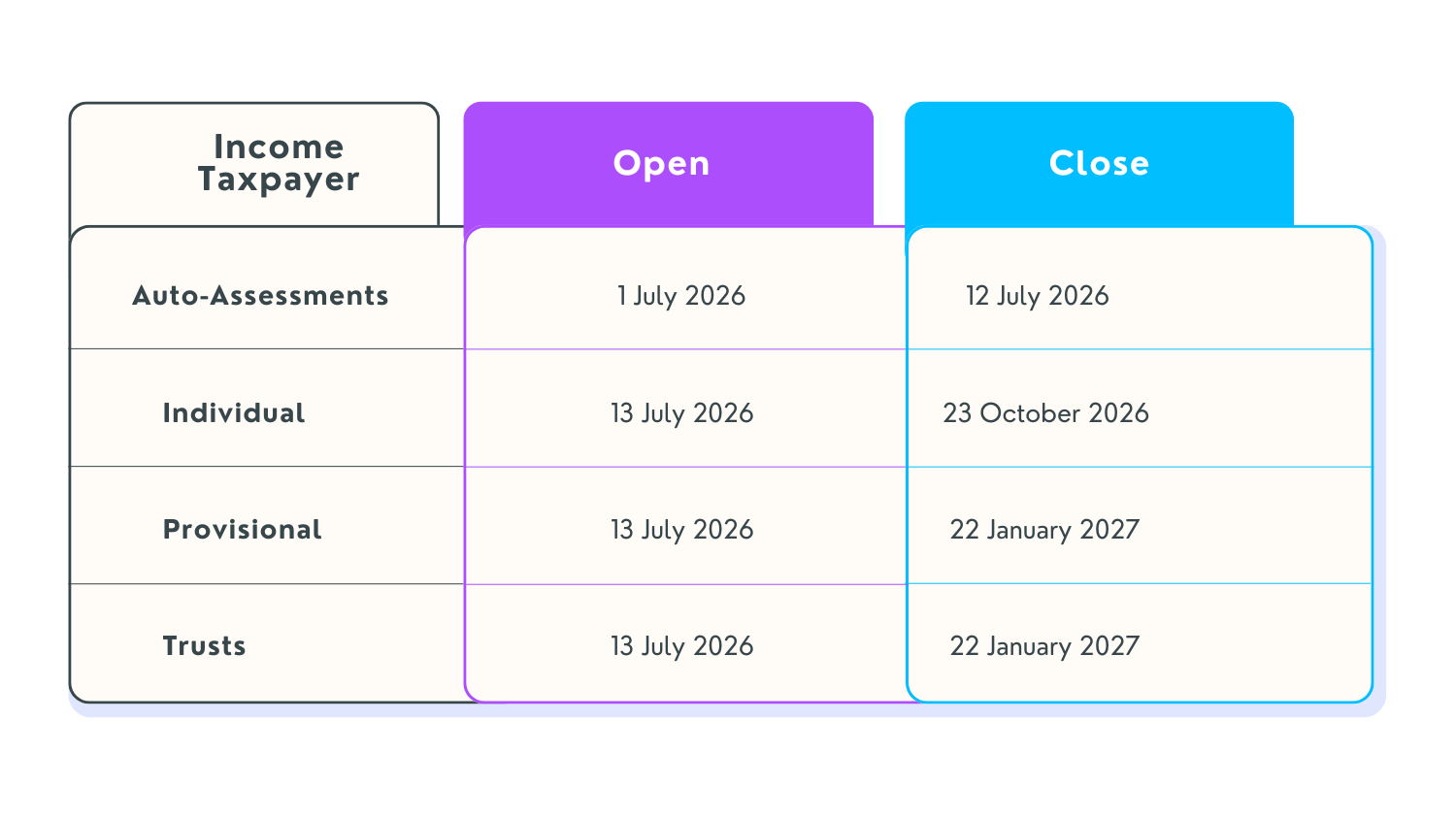
The tax season for individual taxpayers (non-provisional) will begin on 13 July until 23 October 2026. However, SARS has announced that it will start auto-assessments from 1 July, which will run until 12 July 2026.
Before you prepare your return, it's important to understand which taxpayer category you fall into, as this determines your filing deadlines and obligations.
Non-provisional taxpayers are individuals who earn a regular salary from an employer and have PAYE deducted throughout the year. If you fall into this category and do not earn any additional income, filing is usually simpler, with SARS often issuing an auto-assessment or requiring you to submit a return once a year.
The SARS is expected to auto-assess about 6 million taxpayers with less complicated tax matters this year. These individuals are automatically selected because SARS has received complete data from employers, banks, and medical aids to fill in their returns.
SARS is sending notices directly to selected taxpayers via SMS, email, or WhatsApp from July 1 to July 12. If you fall under the following categories, you are likely to be selected for an auto-assessment:
Your financial records are straightforward and come only from verified third parties (e.g., standard salary income, basic bank interest).
You do not have complex income sources, such as freelance earnings or rental property income.
In contrast, provisional taxpayers are individuals who do not earn a traditional salary and may receive income outside of a traditional employment contract. Good examples of this include freelance workers, business owners, or individuals or earn an income from rent.
These individuals typically do not have PAYE deducted from their income and are therefore required to pay tax in advance by submitting provisional tax returns (IRP6). These payments are made twice a year, with an optional third “top-up” payment.
For provisional taxpayers, the filing season will begin 13 July to 22 January 2027. These dates also include the filing window for trusts.
Documents Required for Filing
What is SARS Auto-Assessments?
Auto-assessments are assessments automatically conducted by SARS based on information they have readily available, making it easier for taxpayers. This is a stress-free approach, especially if your tax affairs are “straightforward.”
Documentation for Auto-Assessments
To ensure your auto-assessment is accurate, it’s important to update all relevant information, including banking details, residential address, and additional sources of income if not tracked by SARS. Here’s all the information SARS uses during an auto-assessment:
Your employer
Banks
Medical schemes
Retirement funds
Insurers
For many individuals who are auto-assessed, it often means you do not need to submit a tax return yourself.
Important to note: Taxpayers are entitled to challenge an auto-assessment where information is missing or has been incorrectly populated. Many taxpayers incorrectly assume that an auto-assessment is final; however, you have until 23 October 2026 to reject the assessment and amend your tax return should you need to include any additional information.
It is also crucial to understand that receiving an auto-assessment from SARS does not remove your responsibility as a taxpayer to ensure that your tax declaration is complete and accurate. In certain instances, income or deductions may not be reflected in the third-party data available to SARS. SARS will therefore not necessarily be aware of all amounts that should be declared.
It remains your responsibility to review the auto-assessment carefully and amend the return where necessary. The fact that SARS issued an auto-assessment does not mean that you are no longer responsible for the accuracy and completeness of the information submitted.
Lastly, one reason some taxpayers may not receive an auto-assessment is that SARS has requested them to update or confirm their personal details, but they have not yet done so. In recent months, many taxpayers have been prompted on eFiling to confirm their email address and cellphone number. This is intended to ensure that SARS can send notices relating to auto-assessments and other important tax matters.
Non-provisional taxpayers
SARS often uses their auto-assessment feature on individuals who have less complex tax affairs. If you are not selected for an auto assessment, then you will need to submit the relevant documentation. However, the exact tax documentation required as a non-provisional taxpayer will depend on your tax affairs, including whether you belong to a medical aid scheme or have a retirement annuity. Here are the exact documents needed to ensure a successful tax season:
IRP5/IT3(a): Your IRP5 is a document issued to employees by their employers showing all PAYE deductions and earnings. An IT3(a) is issued to employees when no PAYE has been deducted, which is often the case if individuals fall below the tax threshold.
Documents related to medical expenditure: If you belong to a medical aid scheme, SARS requires a medical aid tax certificate for the period 1 March and ending 28 February. Additionally, any qualifying medical expenses paid by you and not the medical scheme should be included.
Contributions to retirement annuities: Income tax certificates received from retirement fund providers for contributions to retirement annuities.
Additional documentation:
Travel logs are required when utilising a company car as a fringe benefit or receiving travel allowance.
All documents related to rental income or any other letting of assets
IT3(b) certificates for local interest income and IT3(c) certificates for capital gains or investment disposals.
Provisional taxpayers
Provisional tax is based on your estimated total taxable income for the full year. Unfortunately, you do not pay it once, but in two main installments with the following documentation:
Records of business, freelance or self-employment income.
Financial statements or accounting records, where applicable.
Bank statements and other records of income received.
Certificates for interest, dividends and other investment income.
Records of rental income and related expenses, if applicable.
Medical aid tax certificates.
Retirement annuity tax certificates.
Tax Changes for 2026
For the 2026 tax season, SARS is attempting to make things easier with the following inclusions:
More information will already be filled in, including investment information, for a more seamless experience.
A simple dropdown list with approved medical aid schemes for easier selection.
The form has been simplified with clearer wording and easier questions.
If you are auto assessed, you can now receive your Notice of Assessment via WhatsApp. Additionally, you can also upload supporting documents to WhatsApp.
There are fewer verification issues. A new declaration alert questionnaire helps identify and resolve potential issues earlier, reducing the likelihood of your return being selected for verification.
Common Filing Mistakes to Avoid
Trusting Auto-Assessments
SARS has made it easier for taxpayers to navigate tax season through auto-assessments. However, this does not always mean you are fully compliant, so it is essential to double-check that all documentation is in order.
Forgetting to declare all income
Many taxpayers fail to declare additional income because they believe it falls below the tax threshold, when in fact it can push them into a higher tax bracket or increase their overall tax liability. It’s important that you declare all income, including rental income, freelance work, investment returns or occasional or once-off earnings. If you fail to do this, you could subsequently be penalised.
Incorrect or outdated banking details
Before tax season begins, make sure you double-check all banking and residential details. If your banking details are incorrect or outdated, refunds may be delayed or rejected by SARS.
Missing deductible expenses
It’s hard to believe, but taxpayers often forget to claim eligible deductions such as retirement annuity expenses, medical expenses and medical aid credits, and donations to approved organisations. It’s definitely worth double-checking that you’re not missing anything when it comes to this.
Simplify The 2026 Tax Season
Despite SARS’ efforts to simplify your tax season experience, navigating it can still feel overwhelming. Whether you are a provisional or non-provisional taxpayer with additional income to declare or just wanting to know more about SARS auto-assessments, Eqeight is here to guide you through the process
Get in touch with us today.